In the mid-19th century, British art was dominated by academic rules, idealized classicism, and a rather rigid approach to beauty, which was inspired by the paintings from Raphael and the High Renaissance. For a group of young artists, this polished perfection felt lifeless and disconnected from nature, emotion, and truth.
In 1848, a group calling themselves the Pre-Raphaelite Brotherhood set out to change that. They rejected academic conventions in favor of intense detail, brilliant color, medieval and literary themes, and a radical commitment to painting directly from nature.
The result was an art movement that shocked Victorian audiences and produced some of the most instantly recognizable paintings in Western art. Below are ten of the most famous Pre-Raphaelite paintings ever created.
1. Ophelia – John Everett Millais
- Date created: 1851–1852
- Dimensions: 76.2 × 111.8 cm (30 × 44 in)
- Location: Tate Britain, London, United Kingdom
Ophelia is perhaps the most iconic image associated with the Pre-Raphaelite Brotherhood. Painted by John Everett Millais (1829–1896), it depicts Shakespeare’s tragic heroine floating in a river moments before her death, surrounded by meticulously painted flowers and vegetation.
Millais painted the landscape outdoors for months, obsessively recording every leaf and blade of grass. The model, Elizabeth Siddal, posed separately in a bathtub filled with water. The result is a peculiar image of beauty and death, nature and narrative, and the ultimate example of the Pre-Raphaelite ideal.
I made a short video about Ophelia on my YouTube channel. You can check it out below:
2. The Lady of Shalott – John William Waterhouse
- Date created: 1888
- Dimensions: 153 × 200 cm (60 × 79 in)
- Location: Tate Britain, London, United Kingdom
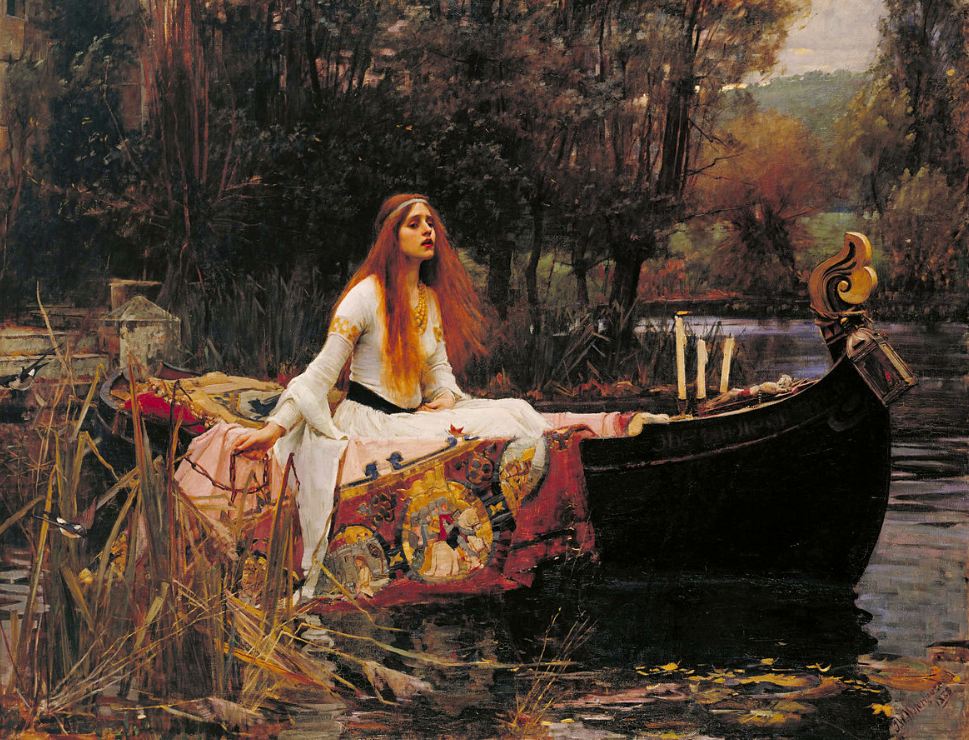
Inspired by Alfred Lord Tennyson’s poem, The Lady of Shalott shows a cursed woman drifting toward Camelot after daring to look directly at the world. John William Waterhouse (1849–1917) painted the moment, once again, I must say, just before her death.
Though Waterhouse belonged to a later generation, his work embodies the Pre-Raphaelite style as he also used literary themes, emotional intensity, and rich symbolism. The candle, tangled threads, and gloomy setting of this masterpiece all reinforce the feeling of inevitable tragedy.
3. Christ in the House of His Parents – John Everett Millais
Date created: 1849–1850
Dimensions: 86.4 × 139.7 cm (34 × 55 in)
Location: Tate Britain, London, United Kingdom
Why not continue this list of famous Pre-Raphaelite Brotherhood paintings with another masterpiece by Millais, right?
This painting, titled Christ in the House of His Parents, caused outrage when it was first exhibited. Millais depicted the Holy Family not as idealized figures, but as ordinary working people in a carpenter’s workshop, complete with dirt, rough hands, and humble surroundings.
Critics, including Charles Dickens, attacked the painting as blasphemous. That was still how it went back then. Today, however, it’s recognized as another prime example of Pre-Raphaelite values. Some of these include truth to nature, realism, and symbolic detail.

4. The Awakening Conscience – William Holman Hunt
Date created: 1853
Dimensions: 76.8 × 55.9 cm (30 × 22 in)
Location: Tate Britain, London, United Kingdom
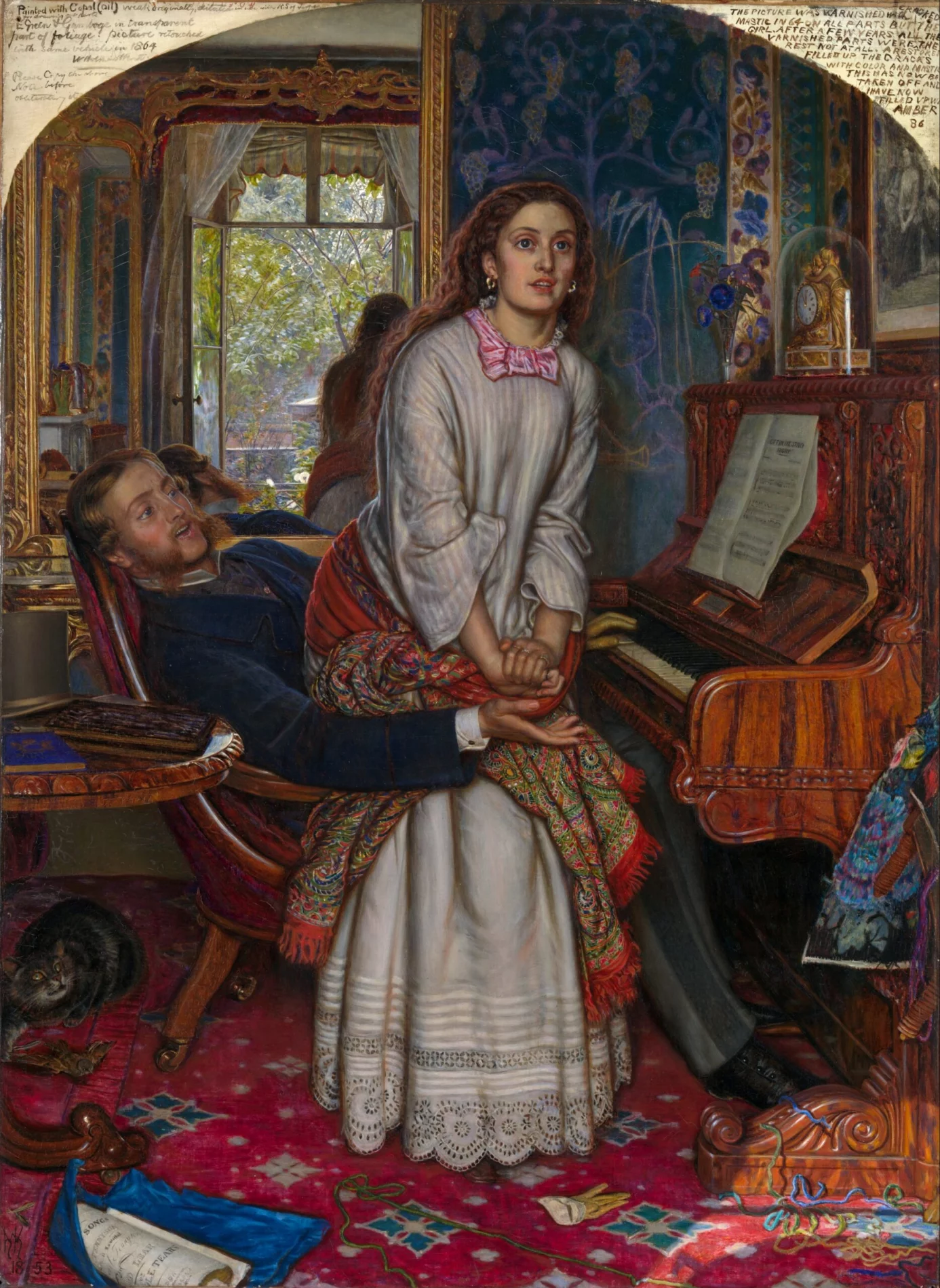
William Holman Hunt (1827–1910) was the most morally driven member of the Brotherhood, and a painting titled The Awakening Conscience is his masterpiece. It shows a woman suddenly realizing the emptiness of her life as she rises from her lover’s lap. A strange subject if you ask me.
Every object in the room carries symbolic meaning, from the trapped bird to the glaring mirror. The painting reflects the Victorian fascination with morality, redemption, and social critique, making it one of the most profound Pre-Raphaelite paintings.
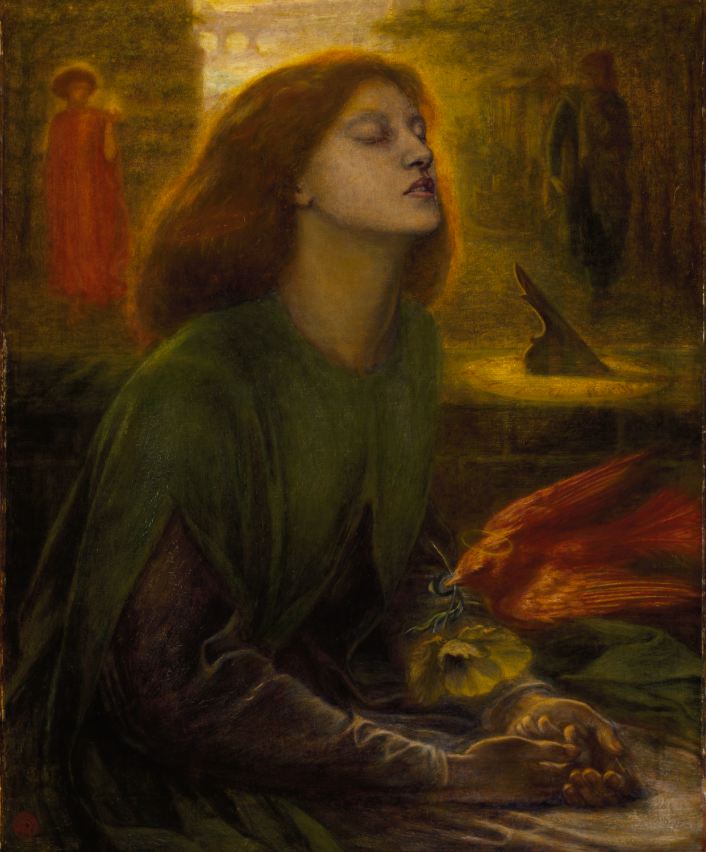
5. Beata Beatrix – Dante Gabriel Rossetti
Date created: 1864–1870
Dimensions: 87 × 66 cm (34 × 26 in)
Location: Tate Britain, London, United Kingdom
Beata Beatrix is both a tribute to Dante Alighieri’s Beatrice and a deeply personal memorial to Rossetti’s wife, Elizabeth Siddal. Painted after her death, the work is quite different from the rest as it blends medieval symbolism with raw emotional intensity.
Rossetti portrays Beatrice in a trance-like state, suspended between life and death. The red dove, the poppy, and the soft golden light all suggest transcendence. Few Pre-Raphaelite paintings are as intimate, poetic, or psychologically charged as this beautiful masterpiece.
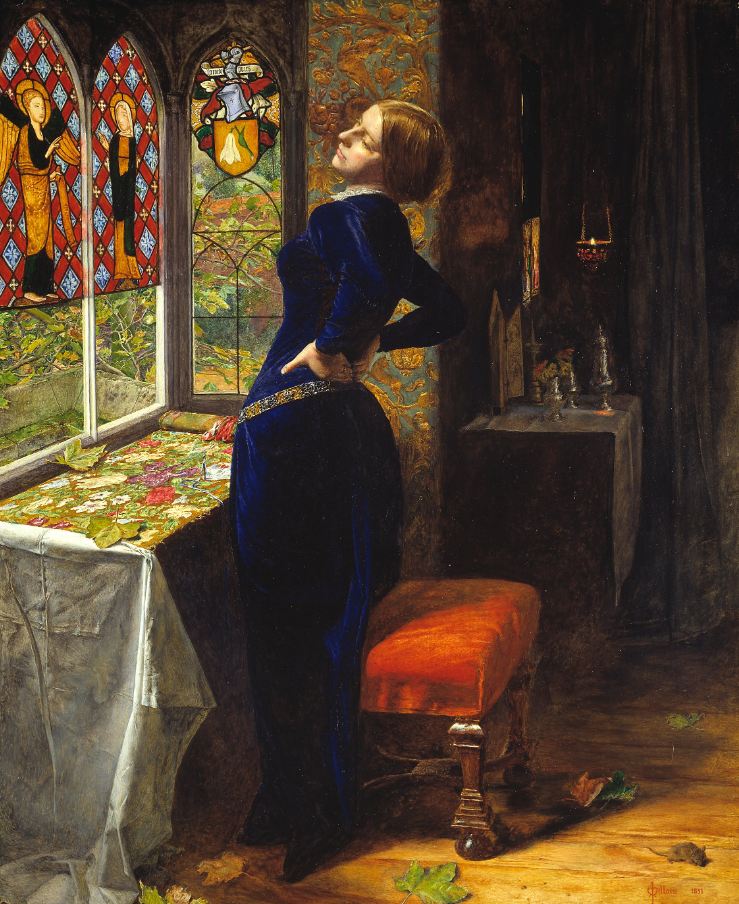
6. Mariana – John Everett Millais
Date created: 1850–1851
Dimensions: 49.5 × 59.7 cm (19.5 × 23.5 in)
Location: Tate Britain, London, United Kingdom
Based on a poem by Tennyson, Mariana depicts a woman abandoned by her lover, trapped in endless waiting. Millais fills the interior with vivid color, stained glass, and obsessive detail, creating a space that feels both beautiful and suffocating.
The realism in this painting is simply astonishing.
The stretched pose of the figure and the autumn leaves on the floor reinforce the main subject of the painting, isolation. It’s a perfect example of how the Pre-Raphaelites transformed literary melancholy into visual form.
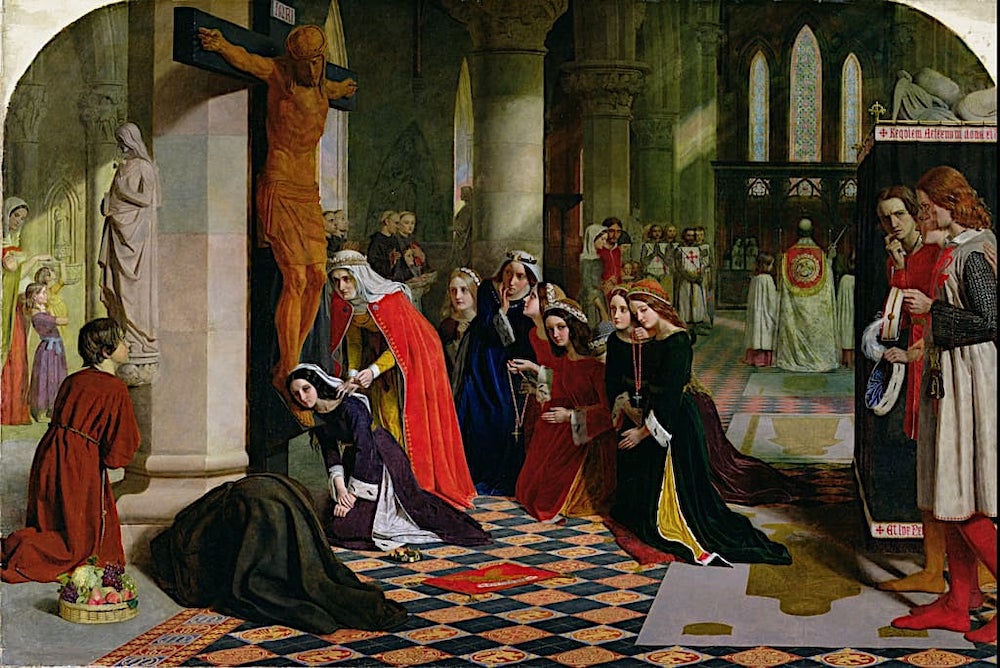
7. The Renunciation of Saint Elizabeth of Hungary – James Collinson
- Date created: 1850
- Dimensions: 71 × 102 centimeters (28 × 40 inches)
- Location: Tate Britain, London, United Kingdom
The Renunciation of Saint Elizabeth of Hungary is the most famous painting by James Collinson (1825–1881), one of the original members of the Pre-Raphaelite Brotherhood. The work depicts the moment when Saint Elizabeth abandons her royal status to devote her life to religious poverty and charity.
The painting reflects the early Pre-Raphaelite emphasis on moral seriousness, historical accuracy, and the emotional restraint that defines the former Gothic period.
Collinson’s personal religious struggles are often part of his work, as he would later convert to Catholicism and eventually withdraw from the Brotherhood. Though his artistic career was short, this painting remains his defining contribution to the movement.
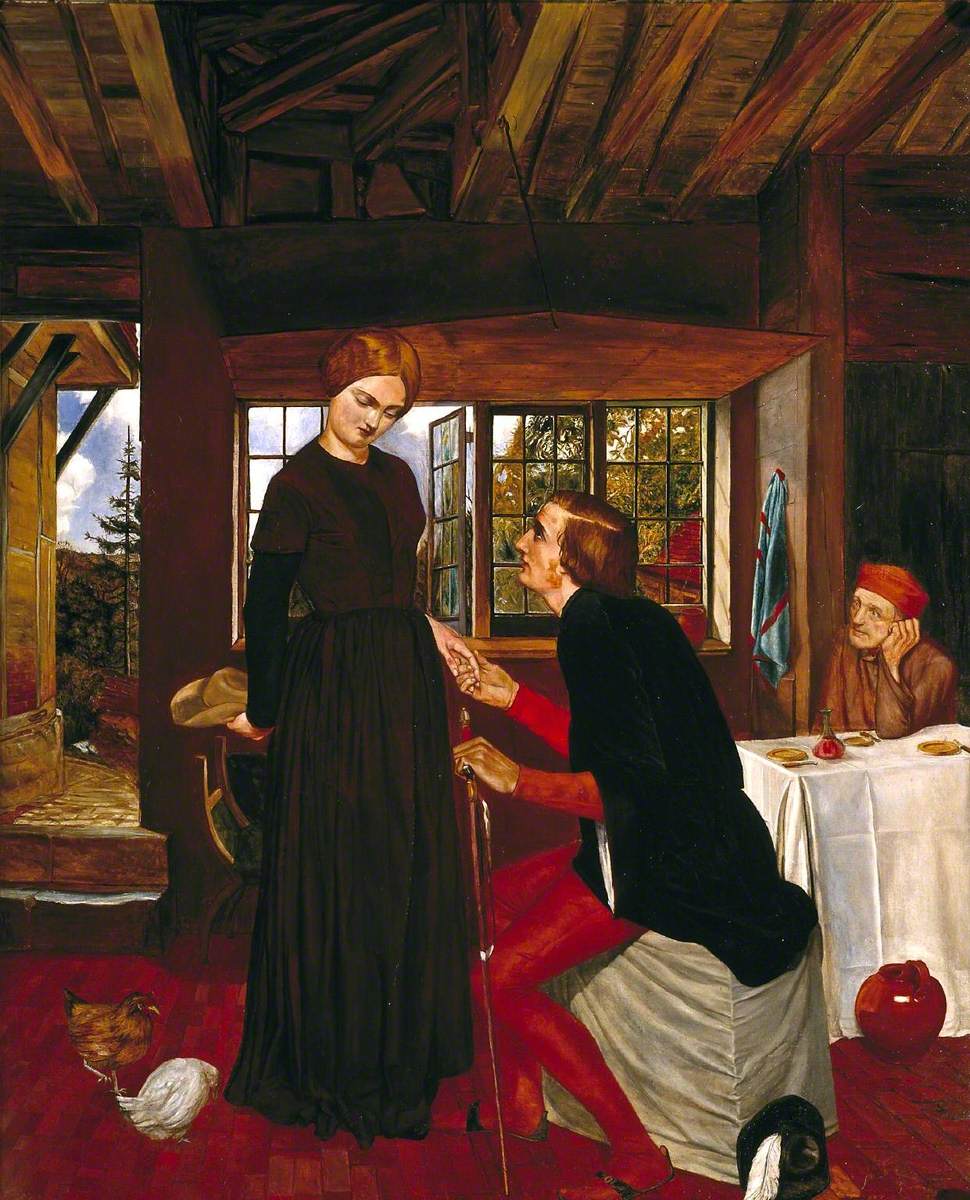
8. Proposal to Miss Grace – Frederic George Stephens
- Date created: 1851
- Dimensions: 76 × 63 centimeters (30 × 25 inches)
- Location: Tate Britain, London, United Kingdom
Frederic George Stephens (1828–1907) is best known today as an influential art critic and historian rather than a painter. His painting titled “Proposal to Miss Grace” is his most notable surviving work.
The painting presents a tense domestic scene centered on an awkward marriage proposal, rendered with sharp psychological observation.
The work reflects Pre-Raphaelite concerns with modern life, and more specifically, the moral choice that comes with it. Stephens soon abandoned painting altogether, becoming one of the most vocal defenders of the Pre-Raphaelites in print. As such, this painting is often viewed as a rare painting from a man who would shape the movement more through words than images.
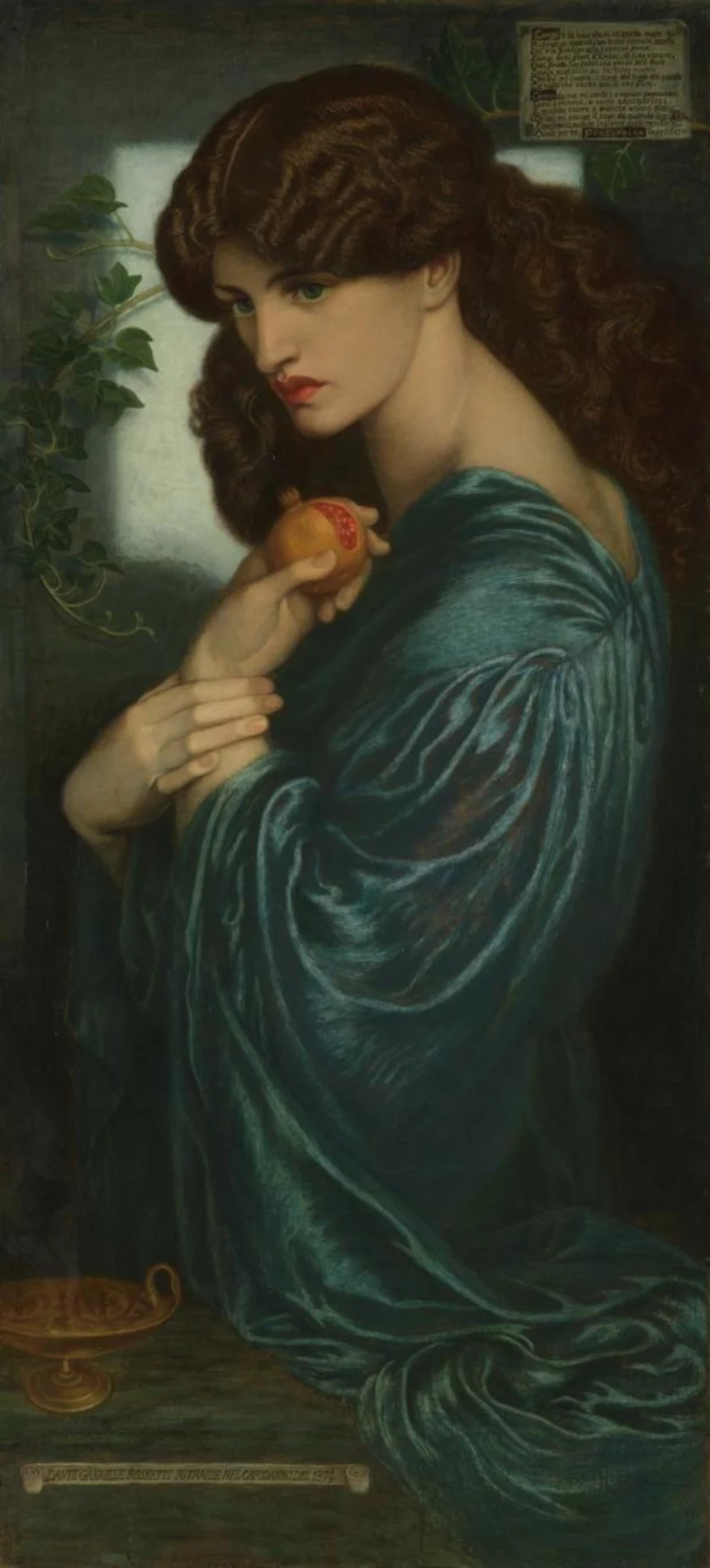
9. Prosperine – Dante Gabriel Rossetti
- Date created: 1874
- Dimensions: 125 × 61 cm (49 × 24 in)
- Location: Tate Britain, London, United Kingdom
Rossetti painted multiple versions of Proserpine, depicting the Roman goddess trapped between the underworld and the Earth. Jane Morris, his muse and lover, served as the model, which adds another dimension to this magnificent work of art.
The dark palette, enclosed space, and symbolic elements all emphasize themes of desire, captivity, and divided identity. It’s one of Rossetti’s most mature and emotionally complex works.
10. Love’s Messenger – Marie Spartali Stillman
- Date created: 1885
- Dimensions: 101 × 56 centimeters (40 × 22 inches)
- Location: Delaware Art Museum, Wilmington, United States
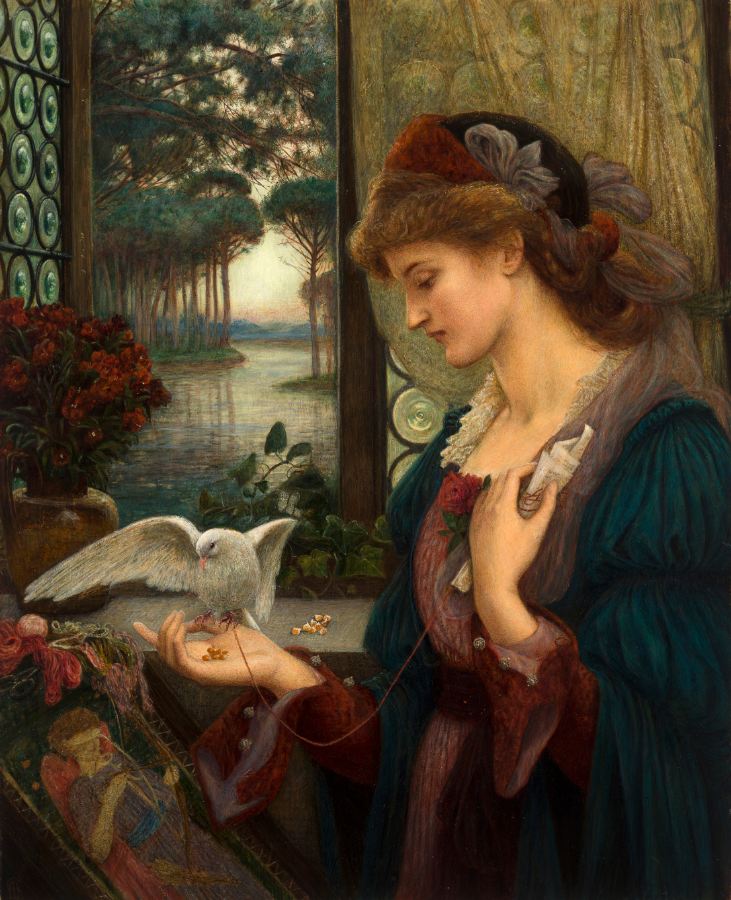
Love’s Messenger is one of the most famous works by Marie Spartali Stillman (1844–1927), one of the most important female artists associated with the later Pre-Raphaelite movement. The painting shows a solitary woman holding a letter, absorbed in quiet contemplation rather than some sort of drama.
Spartali Stillman’s work is known for its elongated figures, muted color palette, and introspective mood. Influenced by Dante Gabriel Rossetti and Edward Burne-Jones, she brought a distinctly personal and psychological dimension to Pre-Raphaelite themes. Love’s Messenger exemplifies her ability to convey emotional depth in her paintings.