
Houston is the largest city in the U.S. state of Texas and the fourth-most populous city in the United States. It sits at the heart of the Greater Houston metropolitan area, a vast region that is home to more than 7 million people and continues to grow at a remarkable pace.
Founded in 1836 and named after Sam Houston, the city developed rapidly thanks to its strategic location, port access, and later, of course, the discovery of oil. Over time, Houston evolved into a global center for energy, medicine, aerospace, and international trade.
Architecturally, Houston is known for its bold skyline, experimental modernism, and sheer scale. Unlike many American cities, and this is quite significant, it has no formal zoning laws, which has resulted in an eclectic mix of historic landmarks, futuristic skyscrapers, and unconventional designs.
Let’s take a closer look at some of the most famous buildings in Houston, structures that define the city’s architectural identity and are must-sees for any visitor who loves architecture as much as I do.
1. JPMorgan Chase Tower
The JPMorgan Chase Tower is the tallest building in Texas and the most dominant feature of Houston’s skyline. Located in the heart of downtown, the skyscraper rises to a height of 1,002 feet (305 meters).
Completed in 1982, the tower was designed in a postmodern style and features a distinctive trapezoidal roof. It was originally known as the Texas Commerce Tower and symbolized Houston’s economic boom during the late 20th century.
Its glass façade and monumental scale make it one of the most recognizable buildings in the city.

2. Williams Tower
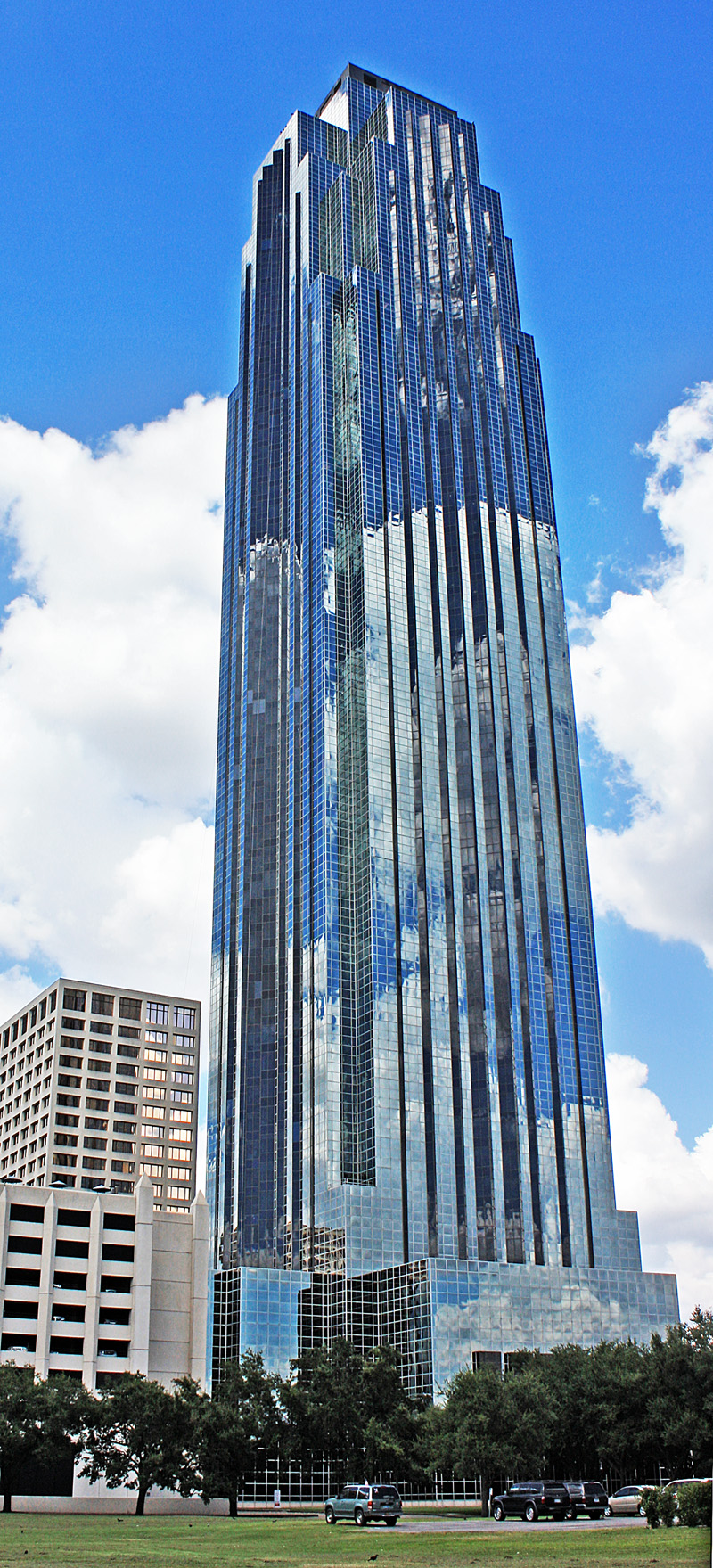
Williams Tower is one of the most unusual skyscrapers in the United States because it is not located in a traditional downtown area. Instead, it rises from the Uptown District near The Galleria.
Completed in 1983, the tower stands 901 feet (275 meters) tall and was once the tallest building in the world outside a central business district. Its dark glass exterior, which shines brightly in the sun, gives it a striking presence, especially at night.
The building is surrounded by landscaped plazas and fountains, making it a centerpiece of the Uptown area.
3. Houston City Hall
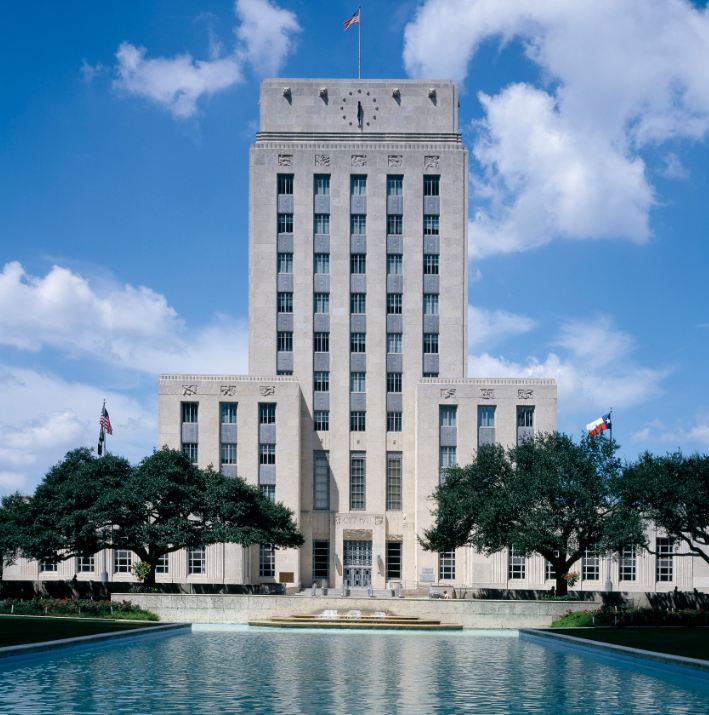
Houston City Hall is one of the city’s most important historic buildings. Completed in 1939, it was designed in the Art Deco style, which was popular in the United States during the interwar period.
The building features clean lines, limestone cladding, and subtle decorative elements that emphasize civic pride rather than excessive ornamentation. It has served as the seat of Houston’s municipal government for decades.
Located in downtown Houston, Houston City Hall remains an essential symbol of the city’s political life, and in my opinion, a pretty beautiful building as well.
4. Space Center Houston
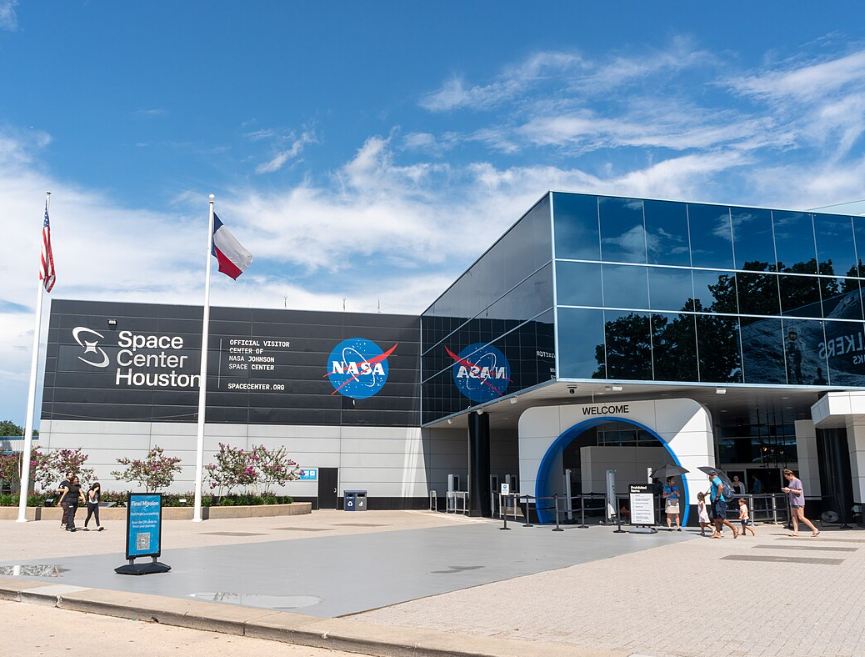
Space Center Houston is not only one of the city’s most famous attractions but also one of the most recognizable buildings associated with NASA. It serves as the official visitor center for the Johnson Space Center.
The complex opened in 1992 and houses exhibitions related to human spaceflight, including spacecraft, moon rocks, and mission control displays. Its bold, futuristic design reflects Houston’s long-standing connection to space exploration.
The site has earned Houston its famous nickname: “Space City.”
5. The Astrodome
The Astrodome is one of the most historically significant buildings in Houston. When it opened in 1965, it was the world’s first fully enclosed, air-conditioned stadium.
Nicknamed the “Eighth Wonder of the World,” the Astrodome revolutionized stadium architecture and introduced innovations such as artificial turf. It hosted baseball games, football games, concerts, and even political conventions.
Although no longer in active use, the Astrodome remains a powerful symbol of Houston’s architectural ambition, which was listed on the National Register of Historic Places in 2014.

6. Wortham Theater Center
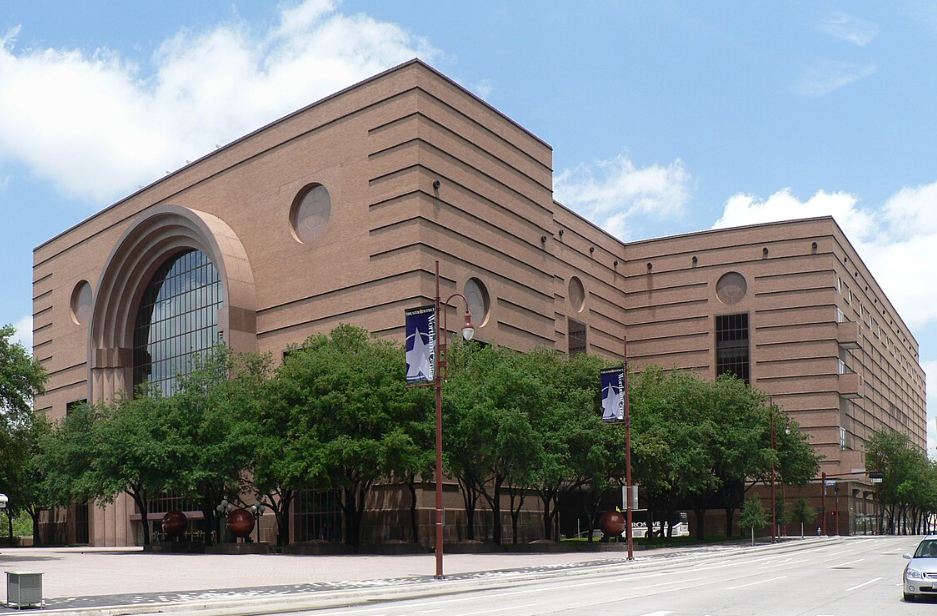
The Wortham Theater Center is a major performing arts building located in Houston’s Theater District. The building opened in 1987 and was designed specifically to house two theaters under one roof.
The complex is home to the Houston Ballet and the Houston Grand Opera. Its exterior features a large glass façade, while the interior includes grand staircases and elegant performance halls.
The Wortham Theater Center plays a key role in Houston’s cultural life and architectural landscape.
7. The Menil Collection
The Menil Collection is one of Houston’s most celebrated architectural and cultural landmarks. The museum complex was designed by Italian architect Renzo Piano and opened to the public in 1987.
The building is known for its modern design that feature simple forms, natural light, and a calm, residential feeling. Its innovative roof system filters daylight into the galleries, creating ideal conditions for viewing art.
The Menil Collection is widely admired as a masterpiece of modern museum architecture.

8. Houston Museum of Natural Science
The Houston Museum of Natural Science is one of the most visited museums in the United States. Located in Hermann Park, the building dates back to 1909, with major expansions completed throughout the 20th and 21st centuries.
The museum complex blends classical elements with modern additions, reflecting its long history and continued growth. Inside, it houses extensive collections related to science, space, paleontology, and world cultures.
Its prominent location and grand scale make it one of Houston’s most important public buildings.

9. 1100 Louisiana (Pennzoil Place)
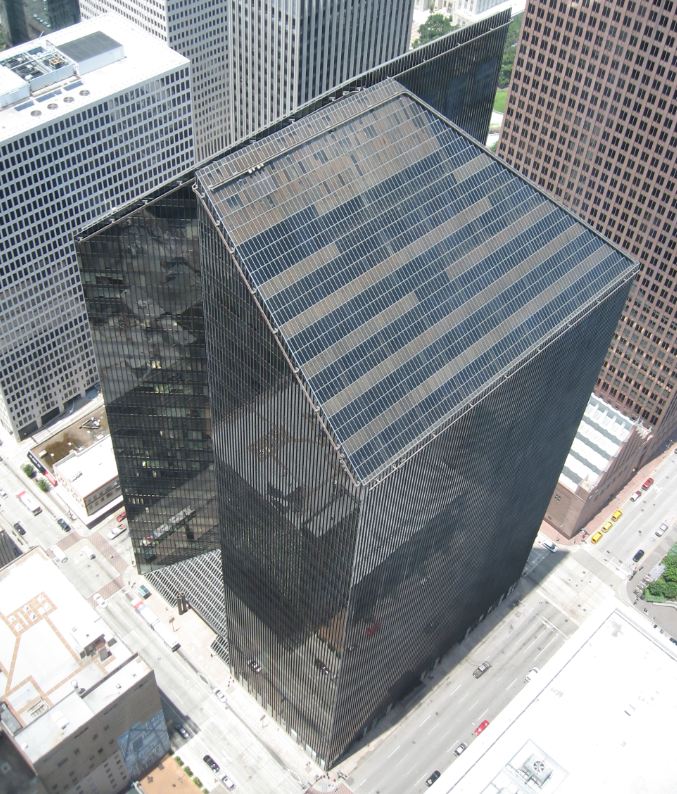
Pennzoil Place, officially known as 1100 Louisiana, is considered one of the finest examples of postmodern architecture in the United States. Completed in 1976, it consists of two trapezoidal towers that appear to face each other across a plaza.
Designed by architects Philip Johnson and John Burgee, the building broke away from the boxy skyscraper designs of the time. Its dark glass façade and angular form had a major influence on modern skyscraper design worldwide.
I don’t know about you, but in my opinion, Pennzoil Place is definitely one of the architectural highlights of Houston.
10. San Jacinto Monument
Although located just outside central Houston, the San Jacinto Monument is one of the most important structures associated with the city’s history. The monument commemorates the Battle of San Jacinto, which secured Texas’ independence from Mexico.
Completed in 1939, the Art Deco monument stands 567 feet (173 meters) tall, making it taller than the Washington Monument. It is topped with a large Lone Star symbol, visible from miles away.
The monument and its surrounding historic site remain powerful symbols of Texas pride and identity.